Meet our Newest Staff and Faculty
POSTED ON: October 22, 2026
The Albert Nerken School of Engineering is excited to welcome five new faculty members and new Director of Engineering Laboratories, Shops, and Technicians for the Fall 2026 Semester.

Amanda Lombardo has joined the School of Engineering as Director, Engineering Laboratories, Shops, and Technicians. With both a Master of Science in Information and Knowledge Strategy from Columbia University and A Bachelor of Engineering in Mechanical Engineering from Cooper Union, her work combines expertise in engineering education with facility and operational management. Amanda has previously worked at NYU Gallatin as the Associate Director of Science, Technology, Arts, and Creativity, as well as at Columbia University as the Manager of Instructional Laboratories in the Department of Mechanical Engineering. She believes that hands-on, project-based learning is critical to a successful student learning experience.
“Having been an undergraduate at Cooper, I know how integral the labs, shops, and technicians are to the student experience. I’m looking forward to helping support these resources that can deeply impact students both in their time here and in their future lives and careers.”
DEPARTMENT OF COMPUTER SCIENCE

Dr. Lali Devadas earned her B.A. in mathematics and computer science from Columbia University in 2020, and her Ph.D. in computer science from Massachusetts Institute of Technology (MIT) in 2026. While at MIT, Lali worked in the Computer and Information Security group under the supervision of Yael Tauman Kalai and Vinod Vaikuntanathan and focused on exploring the theoretical frontiers of cryptographic delegation of computational tasks. Nowadays, she is interested in building practical secure multiparty computation protocols with low overhead.
Aside from research, Lali enjoys fiber arts, particularly knitting and crochet, and trying new recipes.
“I am so excited to be here at Cooper! Everything I’ve seen and heard so far tells me that this is a really special place with incredible students who are brilliant and curious. I felt that my undergraduate experience was a very exciting time in my life, as I honed in on an area I wanted to dive deeper into. I can’t wait to have the opportunity to help other students find their passions.”
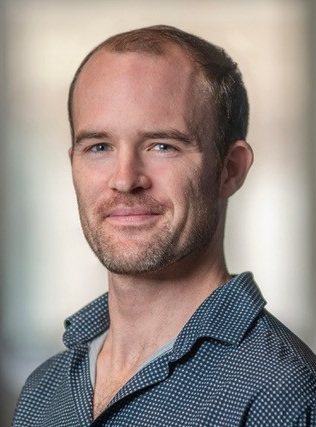
Dr. Luke Evans received his Ph.D. in scientific computing at the University of Maryland, College Park in 2023, where he researched machine-learning methods for quantifying rare events in computational chemistry. Afterward, he worked as a postdoctoral fellow at the Simons Foundations’ Flatiron Institute, primarily on inverse problems in structural biology. His main research interests are in scientific computing, machine learning, and uncertainty quantification for noisy and high-dimensional data in the physical sciences.
In collaboration, he has worked with computer scientists, mathematicians, chemists and experimental biologists, and looks forward to similar interdisciplinary collaborations at Cooper Union. In mentoring, he has worked with students on topics such as dimension-reduction, unsupervised learning, and uncertainty quantification, and looks forward to continuing this in teaching and mentoring. In addition to Cooper Union, he will also be working jointly as an associate research scientist at the Flatiron Institute, and he is excited to foster connections between Flatiron and Cooper Union.
Outside of work, he enjoys reading, watching movies, playing video games, and running.
“I am really thrilled to join Cooper Union in the Fall! I feel that science is an inherently creative process and that Cooper Union really exemplifies this. It’s a unique opportunity to help start a new department, and I’m happy to take part in that adventure with the students in and around computer science.”
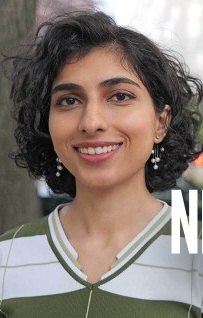
Dr. Amna Liaqat received her Ph.D. and M.Sc. in Computer Science from the University of Toronto and her B.Sc. in Business and Computer Science from Simon Fraser University. Prior to joining Cooper Union, she was a Presidential Postdoctoral Research Fellow at Princeton University and a postdoctoral researcher at George Mason University.
Her research lies at the intersection of human-computer interaction, learning technologies, and social computing. She designs and studies technologies that support creativity, learning, and social good, with a particular interest in understanding how technology can enrich the ways people create and connect with one another.
Her work is interdisciplinary, bringing together perspectives and methods from computing, design, the social sciences, and other fields to address complex human and societal challenges. She is particularly interested in research grounded in the needs and experiences of real people and communities, and in collaborating across disciplines to imagine and build new forms of technology.
“I’m excited to join The Cooper Union and become part of a community where engineering, art, architecture, and the humanities exist in such close conversation with one another. At Cooper, I’m looking forward to building an interdisciplinary research program and working closely with students to explore new possibilities for technology. I hope to create opportunities for students to pursue ambitious, creative ideas, collaborate with people and communities beyond their own disciplines, and think deeply about how the technologies we design can meaningfully contribute to people’s lives.”
DEPARTMENT OF ELECTRICAL ENGINEERING
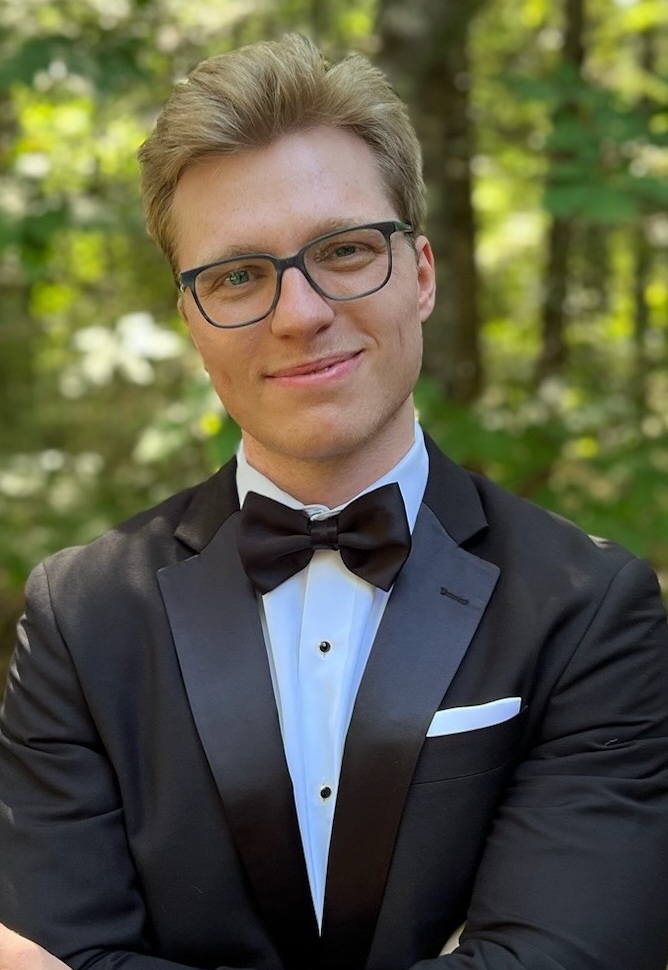
Dr. Aaron W. Langham earned his Ph.D. in Electrical Engineering and Computer Science from the Massachusetts Institute of Technology in 2026. His research interests include sensing, signal processing, and machine learning for physical infrastructure. He has worked extensively with the US Coast Guard on nonintrusive power system monitoring for marine microgrids and looks forward to working with students on sensing the rich urban infrastructure of New York. In his spare time, he enjoys walking the city, playing video games, and tinkering with computer systems.
"I’m extremely excited to join the Cooper Union community this fall! I’ll be teaching EID101 (Engineering Design and Problem Solving) and ECE310 (Digital Signal Processing), and in both courses, I’ll encourage students to meld modern computation and sensing with models grounded in physics. It is a privilege to be able to share my passion for the engineering and technology that enable modern life as we know it."
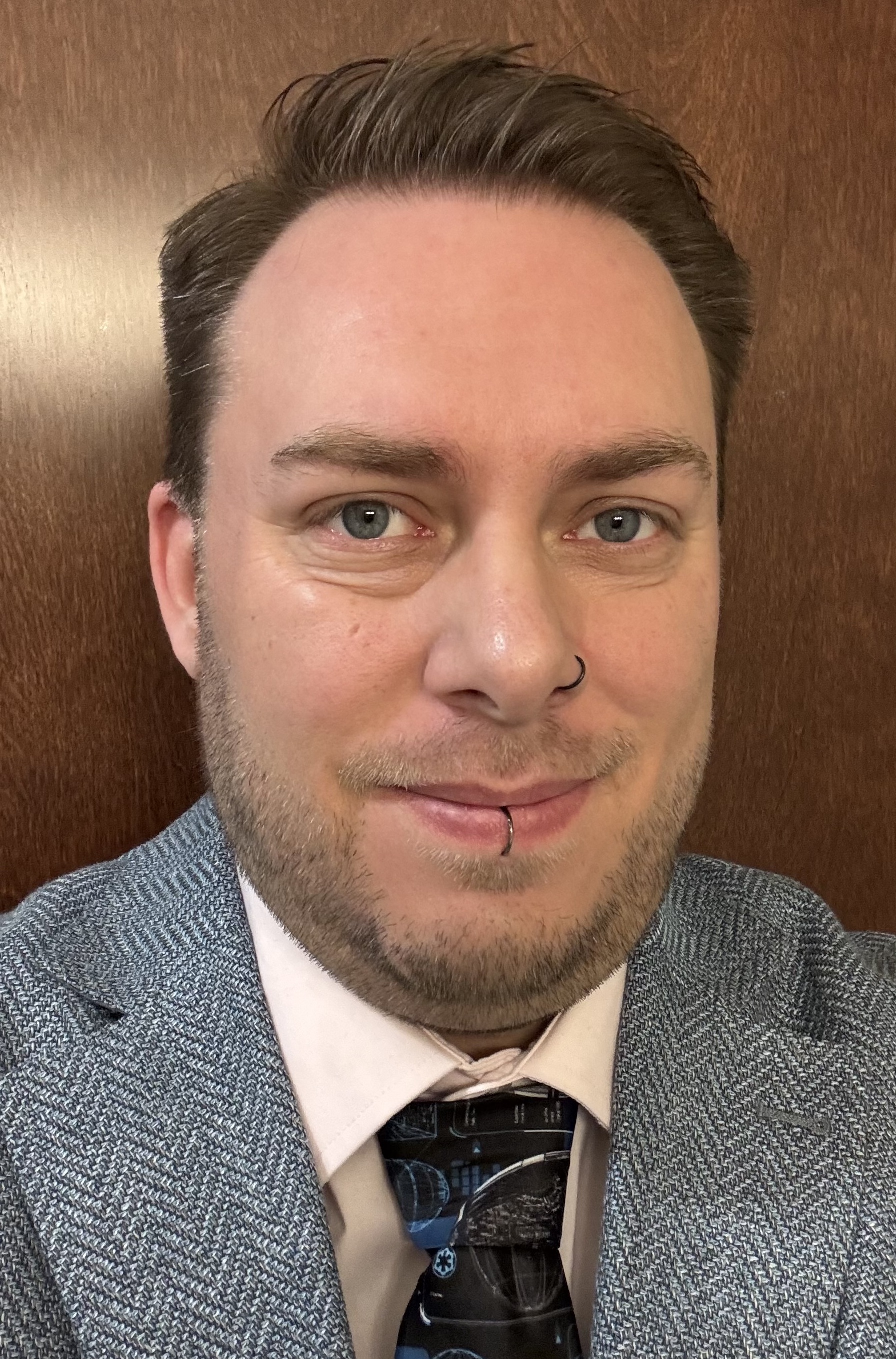
Dr. Phillip Hagen earned his Ph.D. in Electrical Engineering from the University of Idaho, where he also received his B.S. and M.S. degrees in Electrical Engineering. His doctoral research focused on applied electromagnetics and radio-frequency (RF) systems, with an emphasis on developing reconfigurable and adaptive electronic devices.
His research interests broadly involve applied electromagnetics, RF and microwave systems, reconfigurable electronics, and the application of machine learning to electromagnetic design. His recent work has included using machine learning to model nonlinear RF components, investigating the stability and component tolerances of non-Foster circuits, and developing mechanically reconfigurable RF components using soft robotic structures. His broader interests include reconfigurable antennas, wearable and sensing technologies, and new approaches for integrating computational methods with electromagnetic systems.
Prior to joining Cooper Union, Dr. Hagen taught circuit analysis, signal processing, and electromagnetism at the University of Idaho and worked extensively with students on undergraduate capstone engineering design projects. His approach to engineering education emphasizes developing physical intuition alongside mathematical proficiency and encouraging students to evaluate not only whether an answer is mathematically correct, but whether it makes physical sense.
At Cooper Union, Dr. Hagen looks forward to involving undergraduate students in research and creating opportunities for students to apply concepts from the classroom to open-ended engineering problems.
Outside of the classroom and lab, Dr. Hagen can often be found painting miniatures, playing tabletop games, experimenting in the kitchen, or exploring New York City.
“I am excited to join The Cooper Union because of its strong focus on undergraduate education and the opportunity to work closely with students both in the classroom and through research. I have always viewed teaching, research, and engineering design as complementary parts of an engineering education, and I look forward to collaborating with students on research projects as well as open-ended classroom and design projects. I am particularly excited to help students take concepts from their coursework and apply them to challenging problems that do not have predetermined answers, while developing the confidence, independence, and engineering judgment needed to pursue their own ideas. Cooper’s highly engaged student community makes it an especially exciting place to build those kinds of collaborative experiences.”