Espinosa Nova, a revival from the Mexican 16th century
Monday, November 16, 2026, 12:30 - 2:30pm
Add to Calendar
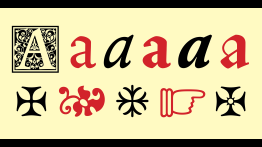
In 1539, the Italian Juan Pablos founded the first printing press in the Americas in the heart of Mexico City. Twelve years later, some new employees arrived. Among them was Antonio de Espinosa, a young Spaniard who would revolutionize the appearance of the books produced by Pablos, and who eventually would become the best Mexican printer of the 16th century. This online talk as part of the Herb Lubalin Lecture Series will describe the development of Espinosa Nova, a celebrated type revival of the Renaissance typefaces used by these two pioneers.
Registration is required here.
Cristóbal Henestrosa teaches typography and type design at the Faculty of Arts and Design at the National Autonomous University of Mexico (UNAM). He has a master’s degree in Typographic Design from the Centro de Estudios Gestalt (Veracruz, Mexico), and a diploma in Type Design from The Cooper Union (New York). Some of his typefaces have been prize winners of the Type Directors Club and selected on several occasions for Tipos Latinos (Biennial of Latin American Typography). Together with José Scaglione and Laura Meseguer, he is the coauthor of How to Create Typefaces (Espinho, Itemzero, 2026).